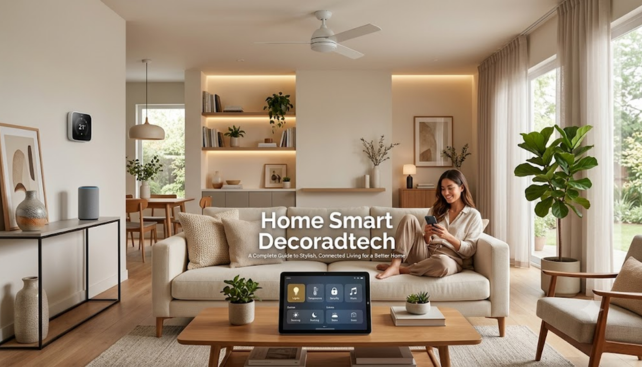
Home smart decoradtech combines useful technology with thoughtful interior design, creating rooms that feel comfortable, attractive, responsive, and easier to manage without turning your home into a distracting gadget showroom.
Imagine returning after work while warm lights appear, curtains close, and the temperature becomes comfortable automatically. That quiet welcome explains why thoughtful automation feels personal, practical, and surprisingly natural indoors.
The goal is not owning every available device. Instead, choose connected products that solve real problems, match your surroundings, hide unnecessary clutter, and remain simple for everyone to use daily.
Smart Home Decoradtech Where Technology Meets Interior Design
Smart home decoradtech gives daily function and appearance equal importance. Every switch, sensor, speaker, camera, screen, and controller should support the room instead of competing loudly for unnecessary visual attention.
While a typical smart home focuses on automation, it often ends up with visible cables, oversized hubs, and devices that don’t blend with the décor.
Home Smart Decoradtech takes a different approach by integrating connected technology seamlessly into the interior design from the very beginning, creating a clean, functional, and visually balanced living space.
Before buying anything, ask two questions: does this product improve daily life, and does it visually belong here? When both answers are yes, purchasing becomes easier, clearer, and more confident.
Decoradtech Smart Home Ideas by DecoratorAdvice Define Your Style First
Decoradtech smart home ideas by DecoratorAdvice begin with a clear design direction. First, describe your preferred interior using three simple words, such as warm, minimal, natural, elegant, playful, or modern.
Next, identify one daily frustration worth fixing. Perhaps mornings feel rushed, entrance security seems weak, energy use feels wasteful, or evening lighting never creates the peaceful atmosphere you want most.
These decisions create a practical shopping filter. Products must suit your style, address the chosen problem, fit available space, and remain useful long after the excitement of installation has disappeared.
Decoradtech Smart Home Ideas by Decorator Advice Choose One Ecosystem
Decoradtech smart home ideas by Decorator Advice recommend selecting one ecosystem before buying devices. Amazon Alexa, Google Home, and Apple Home can organize compatible accessories through familiar applications and commands.
Your strongest choice usually matches the phones, accounts, and services already used by your household. Familiar controls reduce frustration, while one main platform prevents scattered apps and inconsistent daily commands.
Whenever possible, choose Matter compatible products. Matter supports communication across major smart home ecosystems, giving buyers flexibility when adding devices, replacing equipment, or changing platforms during future upgrades with confidence.
Step 1: Prepare a Reliable and Secure Home Network
Reliable automation depends on dependable wireless coverage. Check signal strength in bedrooms, kitchens, entrances, garages, and outdoor areas where locks, cameras, sensors, speakers, or motorized shades require consistently reliable connections.
Before connecting new products, change factory router passwords, install updates, strengthen account protection, and consider placing connected devices on a separate network from computers containing valuable and sensitive personal information.
A strong network may feel less exciting than a new gadget, yet it prevents delayed lights, missed camera alerts, unavailable locks, and routines that suddenly stop working when needed most.
Step 2: Start With Smart Lighting
Smart lighting usually delivers the fastest visible improvement. Adjustable brightness and color temperature can support energetic mornings, afternoons, relaxed dinners, movie nights, and calmer preparation for restful sleep each night.
Hide light sources whenever possible. Position strips beneath cabinets, behind shelves, inside coves, or behind televisions, allowing people to notice soft illumination instead of exposed dots, channels, and visible wires.
When Maya added one warm evening scene, visitors thought she had repainted. Better lighting simply revealed wood tones, softened harsh shadows, and made her affordable furniture feel carefully selected overall.
Step 3: Add Smart Climate and Window Control
A smart thermostat can maintain comfort with fewer manual adjustments. Confirm compatibility with your heating and cooling system, then compare installation requirements, privacy controls, support, certifications, and energy reporting features.
Motorized blinds and curtains can welcome morning daylight, reduce afternoon glare, and restore evening privacy automatically. Choose fabrics that roll or stack neatly so automation improves rather than overwhelms design.
Matching thermostat finishes with nearby switches helps controls resemble architectural details. Likewise, concealed curtain motors and streamlined tracks keep technology visible through smooth movement, comfort, and convenience instead of machinery.
Step 4: Strengthen Smart Home Security
Your entrance combines safety with first impressions. A smart lock can provide application, code, fingerprint, or scheduled guest access while replacing traditional hardware with a cleaner and more coordinated appearance.
A video doorbell or camera should remain noticeable enough to discourage unwanted behavior, yet compact enough to respect the building. Match its finish with handles, lights, gates, and nearby trim.
When choosing smart security devices, prioritize products with strong privacy settings, reliable real time alerts, secure storage options, regular software updates, and responsive customer support. High resolution video is only valuable if notifications are timely and recorded footage is easy to access and review when needed.Step 5: Integrate Entertainment and Smart Furniture
Entertainment equipment often creates significant visual clutter. Hide cables, use ventilated cabinets, mount screens thoughtfully, and consider compact speakers or architectural audio when your property and renovation plans allow installation.
An art mode television can display artwork while inactive, helping the screen join the room’s composition instead of becoming a large black rectangle that visually dominates the wall every day.
Smart furniture may reduce clutter through charging tables, adjustable desks, and discreet power access. However, prioritize comfort and construction because embedded electronics can become outdated before quality furniture wears out.
Home Smart Decoradtech Ideas for Every Room
In bedrooms, prioritize quiet routines, gradual morning light, comfortable temperature changes, and silent blind motors. Avoid bright indicators, loud announcements, or complicated controls that interrupt rest and peaceful nighttime surroundings.
In kitchens, combine under cabinet lighting, smart plugs, leak sensors, and voice controls where messy hands make touching difficult. Position displays away from steam, heat, splashes, and food preparation surfaces.
In home offices, use focused task lighting, temperature control, indoor air quality awareness, and scheduled concentration scenes. The goal is better comfort and attention, not constant notifications from every device.
To keep every upgrade functional and visually cohesive, explore home device decoradtech for practical guidance on choosing smart products that blend naturally with your interior design and daily routines at home.
Budget Friendly and Renter Friendly Decoradtech
Renters can begin with smart bulbs, plugs, portable speakers, removable sensors, and freestanding controls. These products require little alteration, travel easily, and allow beginners to test automation before permanent changes.
Set a realistic budget, then reserve money for networking, mounting materials, subscriptions, replacement batteries, and professional installation. A cheap device becomes expensive when poor compatibility or weak support requires replacement.
Buy gradually and evaluate each upgrade for two weeks. Notice whether household members use it, whether routines save effort, and whether the device looks acceptable during active and inactive states.
How to Buy Smart Home Products With Confidence
Confident buying begins with compatibility, not advertising. Confirm ecosystem support, Matter certification, electrical requirements, dimensions, return terms, warranty coverage, software support, subscription costs, installation needs, and accessible customer assistance beforehand.
Read recent owner feedback for installation problems and long term reliability, but separate personal preferences from repeated faults. Several reports describing the same failure deserve more attention than one complaint.
Whenever wiring, wall cutting, heating controls, or door security exceeds your experience, hire a qualified installer. Professional work protects appearance, performance, household safety, property value, and preserves manufacturer warranty coverage.
Create Useful Automation Routines and Maintain Them
Once your devices are set up, create simple automation routines with easy to recognize names like Morning, Away, Welcome Home, and Night. Test each routine carefully to ensure it works as expected, then let other household members try it on their own to confirm the controls are intuitive and easy to use.
Keep applications, hubs, routers, and device firmware updated. Review permissions, remove unused accounts, replace weak passwords, and check routines after software changes so your connected home remains dependable and secure.
Treat automation like every other household system. A brief monthly check can reveal failing batteries, disconnected devices, expired subscriptions, weak signals, outdated settings, and routines that no longer suit schedules.
The Future of Home Smart Decoradtech
Future systems will increasingly learn household patterns, coordinate devices, and reduce manual control. However, useful intelligence should remain understandable, adjustable, private, and easy to override whenever circumstances make changes necessary.
Health focused homes may combine circadian lighting, air quality monitoring, efficient ventilation, leak detection, and energy management. These tools can support comfort while helping residents notice problems before damage spreads.
The most successful technology will become less visible over time. Speakers, lighting, controls, charging, and sensors will blend into architecture, allowing rooms to feel natural while quietly responding to needs.
Final Thoughts on Home Smart Decoradtech
Home smart decoradtech succeeds when technology fades and everyday life improves. Begin with one room, choose compatible products, protect your network, and expand only after each upgrade proves genuinely valuable.
The right products should save effort, strengthen comfort, improve security, and complement your interior rather than compete with it. Thoughtful planning gives buyers confidence because every purchase serves clear purpose.
Start with the room that frustrates you most. When one simple routine makes mornings easier or evenings calmer, you will understand why a carefully designed smart home deserves thoughtful investment.
Frequently Asked Questions
What is home smart decoradtech?
Home smart decoradtech blends connected devices with interior design, creating a home that works intelligently without appearing cluttered or overly technical.
What are the main benefits of smart home decoradtech?
It improves comfort, security, energy control, accessibility, and convenience while keeping connected devices visually consistent with your home’s existing interior design.
How much does a home smart decoradtech setup cost?
A basic setup can start below $200, while systems with lighting, climate control, security, and advanced automation may cost several thousand dollars.
How is smart home decoradtech different from a regular smart home?
A regular smart home focuses mainly on automation, while smart home decoradtech also emphasizes hidden wiring, coordinated finishes, careful placement, and visual harmony.
What smart home decoradtech mistakes should I avoid?
Avoid incompatible ecosystems, weak Wi Fi coverage, visible cables, unnecessary gadgets, and devices that conflict with your interior style or daily household needs.
Will home smart decoradtech become more advanced?
Future homes will use smarter AI, stronger Matter compatibility, predictive energy management, nearly invisible controls, and increasingly personalized automation routines.