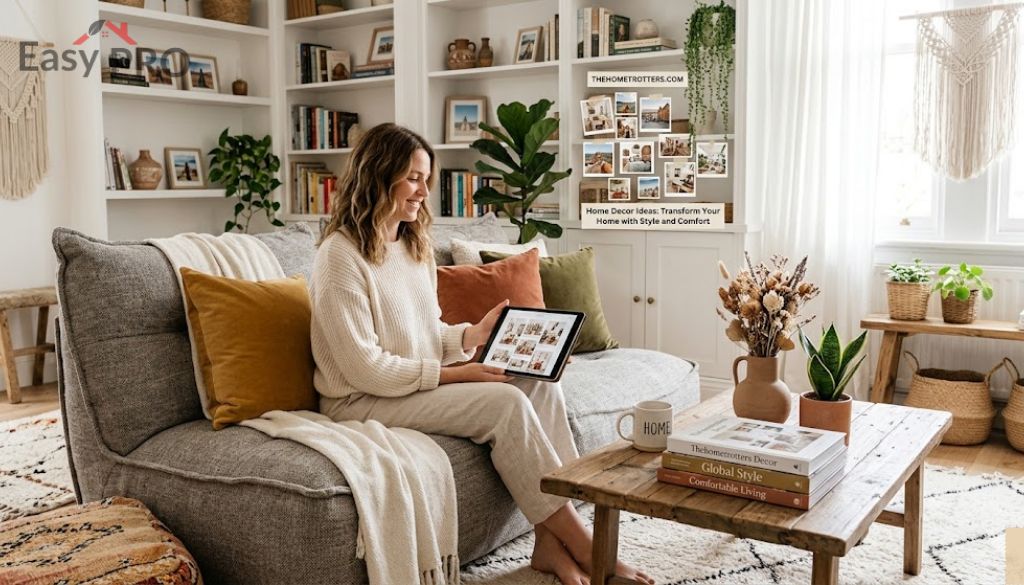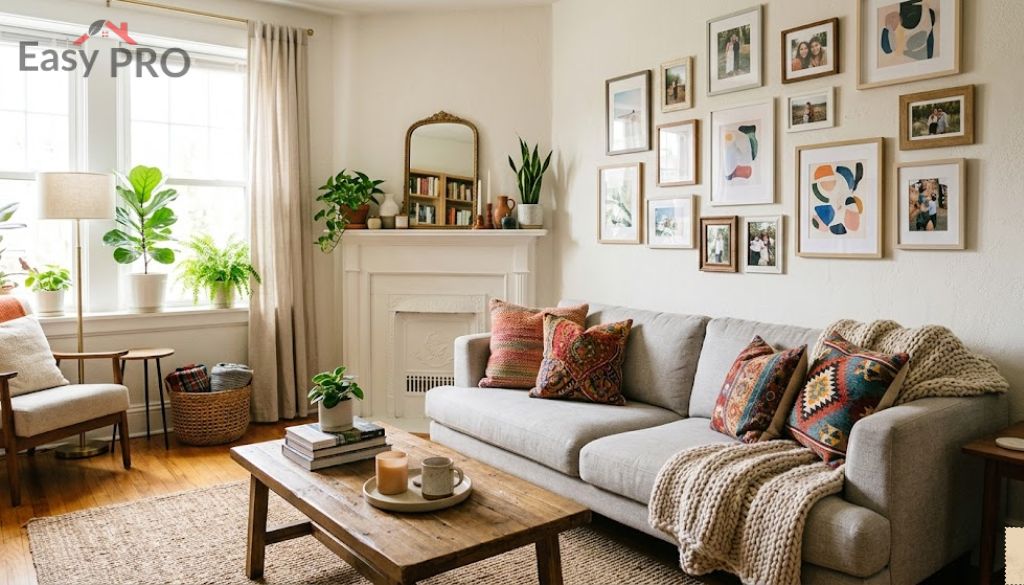
TheHomeTrotters blog home ideas are about more than creating rooms that look beautiful in photographs. The best home ideas make everyday life easier, more comfortable, better organized, and more enjoyable without forcing you into an expensive renovation.
Anyone can scroll through Pinterest or Instagram and find a stunning kitchen, perfectly styled bedroom, or magazine-worthy living room. The real challenge begins when you try to make those ideas work in your own home with your existing furniture, available space, family routine, and budget.
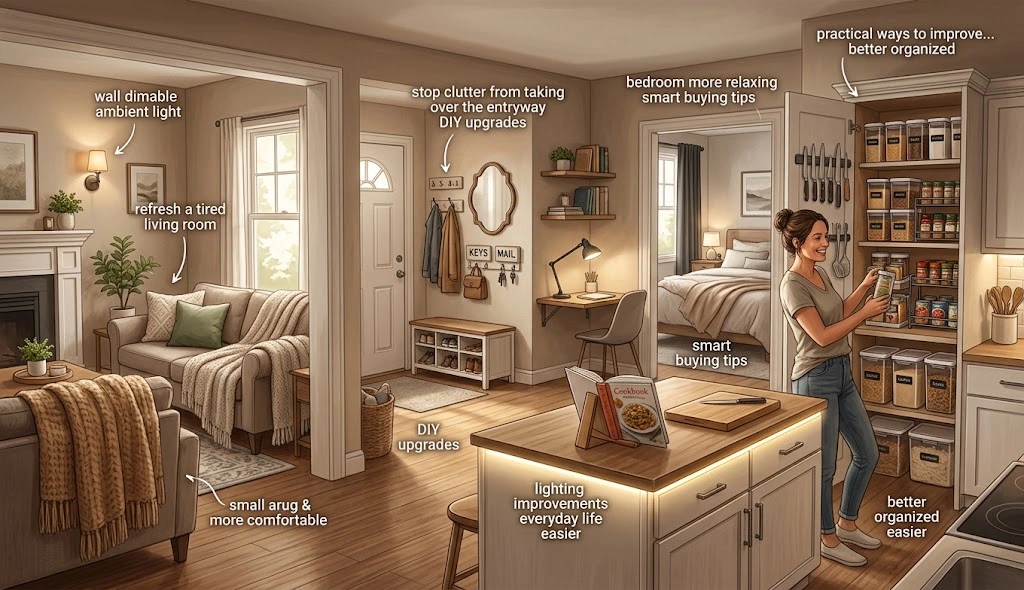
That is where practical home improvement ideas become more useful than simply following trends.
Whether you are trying to refresh a tired living room, create more kitchen storage, make your bedroom more relaxing, improve a small bathroom, or simply stop clutter from taking over the entryway, small changes can produce surprisingly big results.
This guide explores realistic home décor ideas, organization solutions, DIY upgrades, lighting improvements, storage strategies, and smart buying tips that can help you create a home that looks better and works better.
Home Improvement Ideas: Start With the Problem Before Buying Anything
One of the biggest mistakes homeowners make is shopping before understanding what actually needs fixing.
You may think your living room needs another cabinet when the real problem is too much furniture. You may assume your kitchen needs additional storage when half the cabinet space is occupied by things you rarely use.
Before buying anything, walk into the room as if you were seeing it for the first time.
Ask yourself:
- What feels uncomfortable or inconvenient?
- Where does clutter normally collect?
- Which areas are difficult to use?
- Is the room too dark?
- Is furniture blocking movement?
- What do I use every day?
- What could be removed?
- What single change would improve the room most?
This simple process can save you hundreds of dollars.
A Real-Life Kind of Problem
Imagine Sarah has been thinking about replacing her living-room sofa.
The room always feels crowded, so she assumes the sofa is too large.
One Saturday afternoon, before spending money, she experiments.
She removes a side table nobody uses, moves a large toy basket to another room, pulls the sofa slightly away from the wall, and turns an armchair toward the center.
Suddenly, the room feels more open.
Nothing new was purchased.
The sofa was never the problem the layout was.
That gives us one of the most useful rules in home improvement:
Rearrange first. Organize second. Buy third.
Living Room Ideas: Improve Comfort, Layout, and Style
A living room is usually one of the most heavily used areas of a home, which means improvements here can have an immediate effect.
Fortunately, you do not need a complete living room makeover.
Rearrange Furniture for Better Flow
Start by looking at how people move through the room.
You should be able to walk naturally between major areas without squeezing around tables or chairs.
Try these simple changes:
- Move unnecessary furniture elsewhere.
- Turn seating toward conversation areas.
- Keep frequently used tables within reach.
- Avoid blocking doorways or natural walking paths.
- Experiment before assuming furniture must stay against the walls.
A room with less furniture arranged properly often looks larger than a room filled with expensive furniture.
Choose the Right Area Rug
A good area rug can visually connect furniture and make a living room feel warmer.
However, buying the wrong size can have the opposite effect.
Before ordering a rug:
- Measure your seating area.
- Mark the approximate dimensions with painter’s tape.
- Walk around the taped area.
- Make sure the rug will not interfere with doors.
- Check that it visually connects your main furniture.
Never guess rug dimensions from a product photograph.
Home Lighting Ideas: Use Layers Instead of One Bright Light
Lighting is one of the easiest ways to change how a room feels.
Many homes rely almost entirely on one ceiling fixture. Unfortunately, that often creates flat and uncomfortable lighting.
Instead, think in layers.
Useful home lighting may include:
- Ceiling lights
- Table lamps
- Floor lamps
- Reading lights
- Under-cabinet lighting
- Accent lighting
For example, putting a floor lamp beside a reading chair creates both a practical reading area and a warmer atmosphere.
When replacing bulbs, you can also review ENERGY STAR guidance for efficient home lighting. ENERGY STAR provides information on using efficient lighting while still considering room ambience and function.
What Should You Buy?
If your room feels dark, do not immediately buy the biggest lamp you see.
First decide where the missing light is needed.
Then choose a lamp designed for that purpose.
A well-positioned $40–$80 lamp may improve a room more than an expensive decorative fixture placed in the wrong location.
For more practical inspiration, explore TheHomeTrotters Blog Home Ideas for useful home décor, organization, and improvement ideas that can work across different rooms and budgets.
Home Décor Ideas: Add Character Without Creating Clutter
Good home décor should support the room rather than overwhelm it.
A common mistake is believing that every empty wall, shelf, and table needs decoration.
It does not.
Instead, use a smaller number of pieces that have visual impact.
Consider:
- Framed photographs
- Artwork
- Plants
- Textured cushions
- Throws
- Mirrors
- Decorative trays
- A statement vase
You can find broad home design inspiration on Houzz, but remember to adapt inspiration to the proportions and needs of your own room.
Use the “Remove One” Rule
If a shelf looks crowded, remove one item.
Then look again.
Still crowded?
Remove another.
A room often becomes more attractive when the eye has somewhere to rest.
Kitchen Organization Ideas: Make Everyday Cooking Easier
The kitchen is one of the hardest-working spaces in most homes.
Therefore, kitchen organization should be based on frequency of use rather than appearance alone.
Step 1: Clear Your Countertops
Take almost everything off the counters.
Then return only items you regularly use.
For example:
- Coffee maker
- Kettle
- Toaster
- Frequently used utensils
- Essential cooking equipment
Items used once every few weeks usually do not need permanent countertop space.
A clearer counter instantly creates a greater sense of space.
Step 2: Organize Cabinets by Use
Put frequently used items somewhere easy to reach.
Less frequently used items can go higher or deeper inside cabinets.
Useful kitchen storage products may include:
- Drawer dividers
- Shelf risers
- Pull-out baskets
- Turntables
- Pan organizers
- Under-sink organizers
- Clear storage containers
The best organizer is not necessarily the prettiest.
It is the one that makes an item easy to take out and equally easy to put back.
Step 3: Measure Before Buying Organizers
Measure:
- Cabinet width
- Cabinet height
- Cabinet depth
- Drawer dimensions
- Plumbing clearance under sinks
This is particularly important with pull-out systems and under-sink organizers.
Measure twice and buy once.
Kitchen Upgrade Ideas: Refresh Cabinets Without Replacing Them
If your cabinets are structurally sound but look dated, replacing cabinet hardware can produce a noticeable visual improvement.
Before purchasing handles or knobs:
- Count every piece you need.
- Measure existing screw-hole spacing.
- Choose a finish.
- Buy one sample if possible.
- Install the sample.
- Check how it looks during daylight and evening lighting.
- Order the remaining pieces.
This prevents you from spending money on twenty or thirty handles only to discover that they look wrong.
Another useful upgrade is under-cabinet lighting, especially over food-preparation areas.
These relatively small improvements can make an existing kitchen feel significantly more polished without the cost of replacing cabinets.
Bedroom Ideas: Create a Calmer Space for Rest
A bedroom should do more than look stylish.
It should encourage relaxation.
Good bedroom design considers light, temperature, noise, bedding, organization, and visual calm. The Sleep Foundation notes that a cool, quiet, dark bedroom can help create a more sleep-supportive environment.
Make the Bed the Visual Focus
Because the bed is usually the largest object in the room, improving it can change the entire appearance of the bedroom.
You can coordinate:
- Duvet or comforter
- Pillow covers
- Sheets
- Throw blanket
- Curtains
- Bedside lamps
You do not need luxury bedding.
Consistency is usually more important than price.
Reduce Visual Clutter
Keep the nightstand simple.
For example:
- Lamp
- Book
- Phone charger
- Water
Everything else can usually go in a drawer.
The fewer unnecessary objects you see before sleeping, the calmer the space can feel.
Blackout Curtain Ideas: Control Unwanted Bedroom Light
If streetlights, early sunrise, traffic, or neighboring buildings keep your bedroom bright, blackout curtains may be a worthwhile purchase.
The Sleep Foundation explains that keeping a bedroom as dark as practical can support a better sleep environment and specifically identifies blackout curtains as one way of reducing external light.
You can read more in its guide to light and sleep.
Buying Tip
Before buying curtains, measure:
- Window width
- Window height
- Curtain-rod width
- Desired drop
- Space above the window
For a fuller appearance, curtain panels usually need enough combined width to create folds rather than hanging completely flat.
Small Space Ideas: Use Hidden and Vertical Storage
Small homes do not necessarily need less functionality.
They need smarter use of space.
One useful small-space storage idea is using areas that are normally ignored.
Look at:
- Under the bed
- Above cabinets
- Behind doors
- Vertical wall space
- Inside benches
- Corners
- Under stairs
Under-Bed Storage
Flat containers beneath a bed can hold:
- Seasonal clothing
- Extra bedding
- Shoes
- Blankets
- Occasionally used items
However, do not use hidden storage as an excuse to keep things you no longer need.
Storage should organize belongings not preserve clutter.
Bathroom Improvement Ideas: Upgrade Without a Full Remodel
Bathroom renovations can become expensive quickly.
Thankfully, several bathroom improvement ideas can refresh the space without replacing tile, plumbing, or cabinetry.
Replace or Frame the Mirror
A new mirror can transform the appearance of a bathroom vanity.
Before buying, measure:
- Vanity width
- Wall width
- Available height
- Faucet clearance
- Light-fixture clearance
A beautiful mirror is useless if it does not physically fit.
Update Accessories Together
Rather than buying random bathroom accessories individually, consider coordinating:
- Towel hooks
- Soap dispenser
- Mirror frame
- Cabinet hardware
- Storage baskets
A consistent finish can make inexpensive items look more intentional.
Bathroom Caulking Ideas: Fix Small Problems Before They Grow
Old caulk around a tub or shower can crack, peel, or separate.
Apart from looking untidy, failed seals can allow moisture into areas where it should not go.
A basic bathtub re-caulking process generally involves:
- Removing old caulk.
- Cleaning the joint.
- Allowing it to dry properly.
- Applying suitable bathroom caulk.
- Smoothing the bead.
- Allowing adequate curing time.
This Old House also emphasizes preparing a clean, dry surface before applying the replacement sealant.
If you find damaged walls, persistent moisture, loose tile, or an unexplained leak, however, identify the underlying problem before simply covering it with new caulk.
Indoor Air Quality Ideas: Improve What You Cannot See
A beautiful home should also be comfortable to live in.
That means paying attention to indoor air quality, moisture, ventilation, and humidity.
The U.S. Environmental Protection Agency recommends controlling indoor moisture and indicates that relative humidity around 30%–50% is generally desirable for reducing conditions that support mold growth.
Pay particular attention to:
- Bathrooms
- Kitchens
- Basements
- Laundry areas
- Windows with condensation
- Damp walls
- Areas around plumbing
You can also review the EPA’s mold and moisture guidance.
Remember:
Painting over a moisture problem does not fix it.
Find the source first.
Entryway Storage Ideas: Stop Clutter at the Door
Think about what happens during the first minute after someone enters your house.
Shoes come off.
Keys get dropped.
Bags land somewhere.
Mail gets placed on a table.
Instead of fighting those habits, create a system around them.
A useful entryway organization system may include:
- Coat hooks
- Shoe storage
- A small bench
- Key tray
- Baskets
- Mail organizer
The best system is one your household will actually use.
If everyone naturally drops keys near the door, put the key tray there instead of trying to force a completely different habit.
Curb Appeal Ideas: Improve the First Impression
Your home’s appearance begins outside.
Fortunately, basic curb appeal improvements do not always require landscaping companies or expensive exterior work.
Consider:
- Painting the front door
- Cleaning pathways
- Replacing damaged house numbers
- Updating porch lighting
- Adding planters
- Trimming overgrown plants
- Cleaning windows
- Repairing visibly damaged trim
Start With the Front Door
A fresh front-door color can have significant visual impact.
Popular choices include:
- Navy
- Deep green
- Charcoal
- Black
- Muted red
- Warm neutrals
However, choose a color that works with your home’s siding, brick, stone, roofing, and trim not simply the color that is currently fashionable.
Budget Home Improvement Ideas: What Can You Do at Different Price Points?
You do not need to complete every project at once.
Use your budget to prioritize improvements with the greatest practical impact.
| Budget | Home Ideas to Consider |
| Under $50 | Decluttering, reorganizing, plants, baskets, simple accessories |
| $50–$200 | Lamps, curtains, cabinet hardware, organizers, small paint projects |
| $200–$500 | Area rug, larger lighting upgrades, mirror, room painting |
| $500–$1,500 | Furniture upgrades, larger storage systems, multiple-room improvements |
| $1,500+ | Flooring, partial renovations, built-ins, major fixtures |
Before increasing the budget, ask:
Will spending more genuinely solve the problem better?
Sometimes it will.
Sometimes a $30 organizer does exactly what you need.
DIY Home Improvement Ideas: Know What You Can Safely Do Yourself
DIY projects can save money and provide a satisfying sense of accomplishment.
Beginner-friendly projects often include:
- Painting
- Installing simple shelves
- Replacing cabinet handles
- Furniture assembly
- Basic organization
- Hanging curtains
- Decorative changes
However, know your limits.
Work involving electrical wiring, significant plumbing, structural alterations, gas systems, roofing, or serious moisture damage may require a qualified professional.
Saving money is useful.
Creating an unsafe condition is not.
Home Product Buying Guide: How to Buy With Confidence
A central goal of thehometrotters blog home ideas is not simply helping you discover attractive products.
It is helping you decide whether a product is actually worth buying.
Use this six-step checklist.
Step 1: Identify the Problem
Before shopping, describe exactly what the product needs to solve.
For example:
Bad reason:
“This storage cabinet looks nice.”
Better reason:
“I need closed storage for children’s toys in a 36-inch-wide space.”
The second statement gives you useful buying criteria.
Step 2: Measure Your Space
Record the:
- Width
- Height
- Depth
- Door clearance
- Walking clearance
For larger furniture, place painter’s tape on the floor in the product’s dimensions.
You may be surprised by how different a product feels at full scale.
Step 3: Check Materials
Look beyond photographs.
Review:
- Material type
- Construction
- Weight capacity
- Cleaning instructions
- Assembly method
- Replacement parts
- Durability
Step 4: Read Reviews Properly
Do not rely only on the average rating.
Read:
- Recent five-star reviews
- Three-star reviews
- One- and two-star reviews
Look for recurring comments about:
- Size
- Durability
- Assembly
- Comfort
- Color accuracy
- Missing parts
- Customer service
One negative review may mean very little.
Twenty reviews describing the same problem deserve attention.
Step 5: Check Returns and Warranty
Before purchasing furniture, rugs, lighting, curtains, storage systems, or bathroom products, understand:
- Return window
- Return shipping
- Restocking charges
- Warranty
- Damage policy
A clear return policy makes purchasing online much less risky.
Step 6: Ask the Final Question
Before clicking Buy, ask:
Will this genuinely improve how I use my home?
If the answer is yes and the measurements, materials, reviews, price, and return policy make sense you can purchase with much greater confidence.
Learn more about practical TheHomeTrotters Home Repairs to discover useful ways to maintain, repair, and improve your home.
Quick Home Improvement Ideas: Try This 60-Minute Room Reset
If your house feels overwhelming, forget about improving everything today.
Choose one room.
Then follow this simple plan.
First 15 Minutes Remove Clutter
Throw away obvious rubbish and return misplaced items to their correct rooms.
Next 15 Minutes Clear One Surface
Choose the:
- Coffee table
- Kitchen counter
- Dining table
- Dresser
- Desk
Clear it completely.
Then return only necessary items.
Next 15 Minutes Improve the Layout
Move furniture, reorganize a cabinet, or create a clearer walking path.
Next 10 Minutes Find the Main Remaining Problem
Ask what still bothers you most.
Perhaps the room is:
- Too dark
- Short on storage
- Visually cluttered
- Missing comfortable seating
- Difficult to move through
Final 5 Minutes Decide Your Next Move
Choose one improvement.
You may need:
- A lamp
- Storage baskets
- A rug
- Blackout curtains
- Cabinet handles
- An entryway bench
Or you may realize you do not need to purchase anything.
Both outcomes are successful.
Frequently Asked Questions About TheHomeTrotters Blog Home Ideas
Home Improvement Ideas for Beginners: What Should I Start With?
Start with decluttering, rearranging furniture, organizing storage, improving lighting, painting, and replacing simple accessories.
These projects generally provide visible improvements without requiring major construction.
Small Room Ideas: How Can I Make a Room Feel Bigger?
Start by removing unnecessary furniture and clutter.
Then:
- Maintain open walking paths.
- Use appropriately sized furniture.
- Take advantage of vertical storage.
- Improve lighting.
- Keep surfaces relatively clear.
- Use mirrors thoughtfully.
The objective is not simply to create the illusion of space. It is to make the available space easier to use.
Home Organization Ideas: Should I Organize or Decorate First?
Organize first.
Adding decoration to a cluttered room usually adds another layer of visual noise.
Once storage works and unnecessary items have been removed, decorating becomes easier.
Home Décor Budget: What Items Are Worth Spending More On?
Consider investing more in items that you:
- Use every day
- Need for comfort
- Expect to keep for years
- Would find expensive or difficult to replace
Depending on the household, that may include a mattress, sofa, everyday seating, durable storage, quality lighting, or flooring.
Decorative accessories can usually be changed more cheaply.
Budget Home Ideas: Can I Improve My Home Without Spending Much Money?
Absolutely.
Some of the most effective improvements cost little or nothing.
You can:
- Move furniture.
- Remove clutter.
- Clean neglected areas.
- Reorganize cabinets.
- Simplify shelves.
- Improve furniture placement.
- Repurpose existing storage.
- Coordinate items you already own.
A thoughtful $50 improvement may provide more value than an unnecessary $500 purchase.
Final Thoughts on TheHomeTrotters Blog Home Ideas
The best home is not automatically the newest, largest, most expensive, or most fashionable one.
The best home is the one that supports the people who live there.
That is the real value behind thehometrotters blog home ideas.
Instead of chasing perfect rooms from social media, focus on improvements that solve genuine everyday problems.
Clear the kitchen counter.
Move the sofa.
Improve the lighting.
Organize the entryway.
Make the bedroom calmer.
Repair failed bathroom caulk.
Control moisture.
And above all:
Measure before you buy.
Homes usually do not become better because of one dramatic renovation. They improve through a series of smart decisions made over time.
When you eventually decide to buy a new area rug, storage organizer, lamp, blackout curtains, bathroom mirror, cabinet hardware, or other home improvement product, choose it because it fits your space and solves a real need not simply because it looks attractive in a photograph.
Check the dimensions.
Look at the materials.
Read the reviews.
Understand the return policy.
Compare the value.
Then buy with confidence.
Because a successful home does not simply look beautiful.
It should work beautifully too.
Explore Cool Ideas TheHomeTrotters for creative and practical inspiration to make your home more comfortable, functional, and stylish.