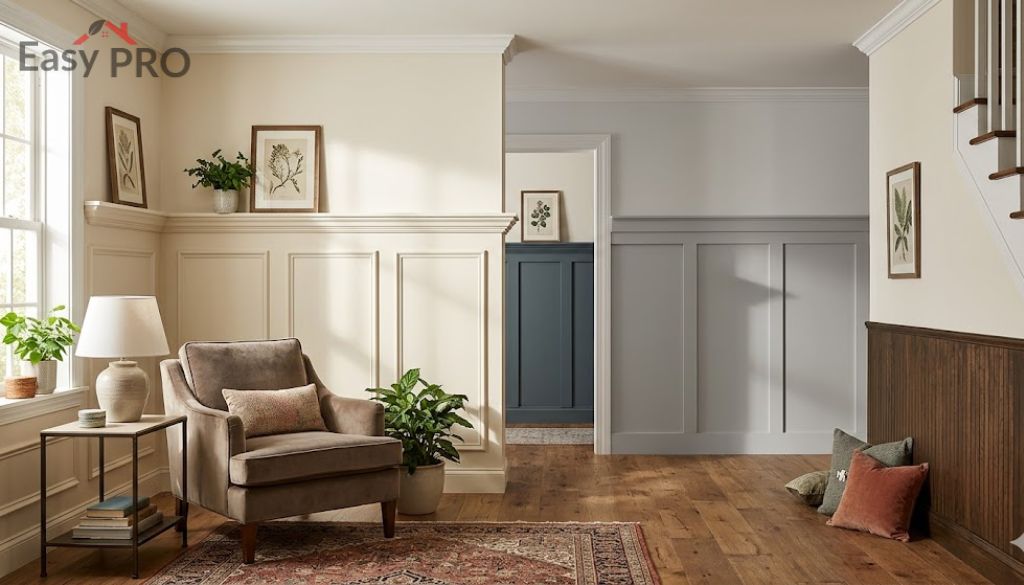
Decorating your home is about creating spaces that feel cozy, stylish, and uniquely yours. One timeless way to add elegance and protection to your walls is through wainscoting. Whether you’re refreshing a modern living room, a formal dining room, or a simple hallway, the right types of wainscoting can instantly elevate any space.
From practical wall protection to architectural elegance, wainscoting panels combine functionality with aesthetic appeal. In this comprehensive guide, we’ll explore the types of wainscoting, materials, installation techniques, and tips to help you make informed choices for every room.
Wainscoting Design Styles: Elevate Your Walls
Understanding wainscoting design styles is essential for selecting a style that complements your home’s architecture. From traditional elegance to modern minimalism, wainscoting brings character and protection to your walls.
Some popular wainscoting design styles include:
- Raised Panel Wainscoting
- Flat Panel (Shaker Style)
- Beadboard Wainscoting
- Board and Batten
- Overlay Panels
- Vinyl or PVC Panels
Beadboard Wainscoting Ideas: Cozy, Cottage-Inspired Walls
Beadboard wainscoting ideas are perfect for kitchens, bathrooms, and casual living spaces. This style features narrow vertical planks separated by grooves, creating a charming, cottage-like appearance.
- Best for: Coastal, farmhouse, or casual interiors.
- Tip: Paint in white or soft pastel colors to enhance a cozy ambiance.
- Materials: Wood, MDF, or PVC for moisture resistance.
Beadboard is ideal for high-traffic or high-moisture rooms because vertical grooves help create an illusion of taller walls, making your space feel more open.
Raised Panel Wainscoting Types: Traditional Elegance
For formal spaces, raised panel wainscoting types provide sophistication and timeless beauty. These panels feature beveled edges and raised sections, creating a three-dimensional effect ideal for dining rooms, foyers, and living rooms.
- Best for: Traditional or colonial-style interiors.
- Tip: Pair with crown molding to complete a high-end look.
- Materials: Solid wood, MDF, or PVC.
Raised panels are often used in two rows for rooms with high ceilings, adding architectural interest and elegance.
Modern Wainscoting Designs: Sleek and Minimalist
Modern wainscoting designs emphasize clean lines and understated elegance. Flat panels, sometimes called Shaker-style wainscoting, are ideal for contemporary homes, minimalistic interiors, or transitional spaces.
- Best for: Bedrooms, living areas, or open-plan spaces.
- Tip: Use neutral colors or subtle contrasts to create depth without overwhelming the space.
- Materials: MDF, wood veneer, or PVC for cost-effective, low-maintenance options.
Board and Batten Wall Ideas: Architectural Texture
Board and batten wall ideas use vertical boards with thin battens covering seams, offering a textured, layered look. This style suits contemporary, farmhouse, or rustic interiors.
- Best for: Accent walls, living rooms, offices, or hallways.
- Tip: Experiment with bold or dark colors for a dramatic effect.
- Materials: Wood, MDF, or PVC.
Board and batten wainscoting is versatile, allowing you to cover one wall or an entire room while maintaining a clean, structured appearance.
Decorative Wall Paneling Styles: Creative Freedom
Decorative wall paneling styles allow homeowners to showcase their personal style. Overlay panels or picture-frame wainscoting provide depth and elegance, perfect for formal rooms, libraries, or dining areas.
- Tip: Combine flat and raised panels to create unique geometric patterns.
- Pro Tip: Use contrasting paint colors to highlight the texture and shape of panels.
Classic Interior Wall Molding: Timeless Appeal
Complement classic interior wall molding with wainscoting to create luxurious, high-end interiors. Chair rails, baseboards, and crown molding enhance the structure and proportion of your walls.
- Tip: Follow the one-third rule – panels typically cover the bottom third of your wall for balance.
- Best for: Libraries, formal dining rooms, and living areas.
Dining Room Wainscoting Ideas: Entertain in Style
A dining room wainscoting idea can instantly elevate a meal from ordinary to memorable. Raised panels or overlay styles convey sophistication, while beadboard adds cozy, approachable charm.
- Tip: Pair with elegant lighting and artwork to enhance the visual impact.
Hallway Wall Panel Designs: Impress Every Visitor
Hallway wall panel designs protect walls from wear while transforming otherwise narrow or overlooked spaces into visually engaging transitions.
- Tip: Maintain consistent panel height throughout the hallway to create visual continuity.
Farmhouse Wainscoting Styles: Rustic Charm
Farmhouse wainscoting styles combine practicality with rustic warmth. Beadboard or board and batten panels in natural wood tones or painted finishes create welcoming interiors with character.
- Best for: Living rooms, kitchens, or family rooms.
- Tip: Mix wood textures and soft colors for an authentic farmhouse feel.
Choosing the Right Wainscoting Type
When selecting types of wainscoting, consider:
- Room function: Moisture-resistant panels for bathrooms and kitchens.
- Architectural style: Raised panels for formal homes, beadboard for casual aesthetics.
- Ceiling height: Taller ceilings may require higher panels.
- Maintenance: Vinyl/PVC requires less upkeep; wood may need refinishing.
- Budget: MDF and PVC are cost-effective; hardwoods are premium.
Step-by-Step Wainscoting Installation Guide
Installing wainscoting panels can be done by homeowners with basic DIY skills. Here’s a step-by-step process:
- Measure walls: Determine wall perimeter and desired panel height.
- Choose materials: Wood, MDF, or PVC depending on durability and style.
- Cut panels: Ensure accurate dimensions for precise installation.
- Attach panels: Use adhesive and finishing nails for secure placement.
- Add molding: Chair rails and baseboards enhance proportion.
- Paint or stain: Finish for protection and aesthetic appeal.
- Inspect: Verify alignment and secure attachment.
Tips for a Professional Finish
- Maintain equal spacing between panels (3–5 inches is ideal).
- Follow the one-third rule for wall coverage.
- Baseboards should complement panel height.
- Use color contrast or tonal matching to highlight or blend panels.
Common Mistakes to Avoid
- Incorrect panel height relative to ceiling.
- Uneven spacing between panels.
- Skipping chair rails or baseboards.
- Using moisture-sensitive materials in high-humidity areas.
Benefits of Wainscoting Panels
- Protects walls from dents and scratches.
- Adds texture and architectural interest.
- Increases perceived home value.
- Versatile for any interior style.
Conclusion
Types of wainscoting offer a perfect blend of style, functionality, and value. From beadboard to raised panels, board and batten to vinyl, there’s a style for every home and budget. By understanding your space, selecting the right materials, and following proper installation techniques, you can transform ordinary walls into stunning features.
Whether you choose modern wainscoting designs, classic interior wall molding, or farmhouse wainscoting styles, your walls can tell a story of elegance and craftsmanship that lasts for decades.
Start exploring your options today, and make your home’s walls a statement with types of wainscoting. Explore smart furniture solutions like beds for limited space to make compact rooms more functional while maintaining style and comfort.
FAQ
What are the main types of wainscoting?
The main types include raised panel, flat panel, beadboard, board and batten, overlay, and vinyl panels.
Which wainscoting is best for high-moisture areas?
Use vinyl or PVC panels for bathrooms, kitchens, and basements due to their moisture resistance.
Can I install wainscoting myself?
Yes, with basic DIY skills and proper tools, simpler styles like flat panels and beadboard are easy to install.
How high should wainscoting be installed?
Typically, one-third of the wall height is ideal; adjust for taller ceilings if needed.
Does wainscoting increase home value?
While it may not directly raise appraised value, well-installed wainscoting enhances appeal and perceived quality, helping sell homes faster.
What materials are commonly used for wainscoting?
Popular options include wood, MDF, PVC, and vinyl, chosen based on aesthetics, durability, and budget.